Based on the artwork of Jerome Witkin and how he deals with identity, I have come up with these questions and concepts.
Essential Questions:
1. How do situations define our identity?
2. Can we identify ourselves based on our experiences?
3. Can a single event define who we are?
4. How does the past affect our identity?
5. How can we express identity based on experiences?
Key Concepts:
1. identities are flexible.
2. Identities can be based on single events.
3. One can use their experiences to define who they are.
4. We can control who we are based on how we act/react.
5. Identity can be in a state of flux from one situation to another.
Monday, November 21, 2011

Sunday, November 20, 2011
Dealing with Identity
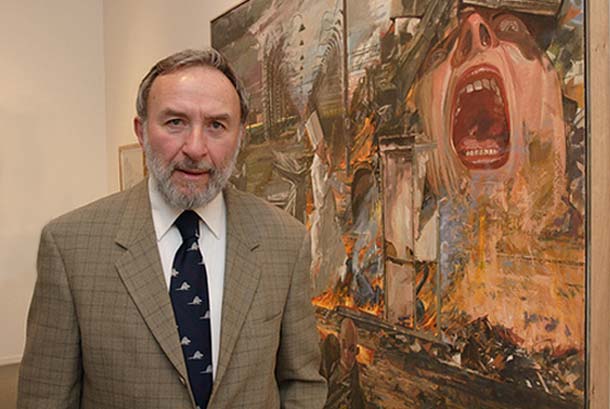
I chose the artist Jerome Witkin as my artist that deals with identity in his artwork. I am drawn to his paintings, especially his paintings done in series. To me, his artwork deals with identity and self, and how a person defines him or her self in a broader society.
"I think there is something about life and art. I mean, if we didn’t have certain experiences with other people reflecting human nature gone wrong, or even human nature gone right, we’d have a background of trauma or background of somebody loving us where you love them back. I think it’s a matter of how you survive certain situations and then what you do with your art."
-Jerome Witkin

Division Street 1984-85

The Beating Station, Berlin 1993

Subway; A Marriage Pt. 1
I am especially drawn to his paintings because he captures a specific moment in time, and the viewer instantly becomes a part of that moment, not just a viewer of the moment. His series Division Street is one of my favorite paintings of all time. Seeing these paintings at the Munson Williams Proctor Art Museum was quite the experience. They are very large and overwhelming. I would go and sit on the bench in front of them and just admire his painting. There is so much emotion of these people captured in the moment, and I feel as though I was a part of the fight. As a viewer it is very easy to relate to the problems the people in the painting are going through, and that makes them far more personal. He did a series on the Holocaust (see the center image, The Beating Station, Berlin) that explored his history as a Jewish man, and what happened to other Jews during the Holocaust.Monday, October 17, 2011
Portfolio For Art Education Application

Self Portrait
Clay
9 in x 9 in

Paper Mixer
Bristol Board, Drawing Paper, Elmer's Glue
6 in x 4 in

Steve
Charcoal Drawing
24 in x 36 in

Table Still Life
Charcoal Drawing
24 in x 36 in

Rectangle Ring
Copper, Silver
1 in x .5 in

Riveted Ring
Copper, Brass
1.5 in x .5 in

Copper Leaf
Copper
3 in x 1 in

Window Brooch
Copper, Plexiglass
2 in x 1 in

Mid-Day Forest
35mm Black and White Film Photography
11 in x 14 in

Makeup (Part 1)
35mm Black and White Film Photography
11 in x 14 in

Makeup (Part 2)
35mm Black and White Film Photography
11 in x 14 in

Looking Out
35mm Black and White Film Photography
11 in x 14 in
Wednesday, September 21, 2011
Trimis & Savva Reading Questions
I enjoyed this reading about how a teacher can incorporate the outside world into a lesson that will not only teach students about their surrounding areas, but help them to understand mediums in more depth. It also gives students a chance to get out of the classroom and into their real world, showing that "learning takes place in real situations and is not limited to the classroom" (Trimis and Savva 2009). My one big problem with this article is that the teachers took the children out of the classroom... Not that taking them out is an issue, but field trips are rarely funded or approved in schools anymore. Are art teachers even allowed to take students on field trips? And if they can, are they even funded trips? Though an excursion out of the classroom is not technically a field trip, are teachers allowed to take students out of the classroom during the school day? Other concerns I have about this article are time to complete, and time constraints. It says about letting the project run as long as children are interested, but in a regular elementary art classroom, you may only have the students for 40 minutes, and by the next class, they may have lost interest. But then you have a half finished or hardly started project, and no where to go with it because students have lost interest. I did enjoy this article, and it has helped me to think about my place-based art education project a little more in depth.
Wednesday, September 14, 2011
Studio Explorations Idea
I babysit after school everyday. My job is to get the kids off the bus at the end of the street. When we were younger, does anyone remember an adult having to "get them off the bus" everyday? The bus driver will not let them off the bus unless there is an adult there for them to go with. And not just any adult. Someone the child knows and the bus driver recognizes. Every. Single. Day. Daniel's bus driver asks him every day (it's been 6 days now) if I am the one who is supposed to be getting him. He's in fifth grade. In our paranoid and corrupt society today, it is an unfortunate necessity for someone to get their children directly off the bus. I think I want to further explore this concept of paranoia, fear, and crime that happens to children all over the world, but specifically in America. Their stop is on a road in the woods, so I might consider using this actual area, or just the feelings this place gives me, and the feelings of waiting for them to safely arrive home from school.
Wednesday, September 7, 2011
My Artwork
I am trying to grow as an artist and get my hands in a variety of mediums. I love to explore new mediums and see what I can do with them. Currently in my work, I am playing with the concepts of geometric and organic, and what those can do when they interact. These are just a small selection of the mediums I enjoy most.
 |
| Self Portrait. Clay |
 |
| Traditional Black and White Photograph, 11x14in |
 |
| Still Life. Charcoal, 24x36in |
 |
| Figure Drawing. Charcoal, 24x36in |
 |
| Ring. Copper and silver |
 |
| Ball Brooch. Copper and Brass |
 |
| Riveted Ring. Copper and Brass |
 |
| Traditional Black and White photography. 11x14in |
Reflection of Group Work
I wish we had more time in our group to better discuss our articles in more depth. Three of our articles, mine included, were about teaching art education more effectively, while the other two seemed to be less concerned with art and more concerned with other issues facing education as a whole. I believe as an art teacher it is important not to be just the crazy artist whom the teachers send their students to for an hour a week. Students should not be learning about just art in art class. My article, about the Choice, Voice, and Challenge method of integrating creativity into not only art projects but into regular classroom projects as well, shows that art should not stop after art class is over, while educational learning should not stop when students enter art class. I believe this is a good method to have because it shows the importance of creativity in everything a child does. It can get students interested in learning things that are not always the easiest to digest because of how boring most teachers approach them. I do believe that art teachers should be artists themselves, as well as educators. I believe art teachers should be artists who have a passion for sharing their love of arts with others, and not educators who have taken a few art classes. It takes a real passion for art to light the spark in students to make them not only appreciate but enjoy art as well.
Subscribe to:
Posts (Atom)